Some things need to be designed with minute precision or they simply will not work. Computer chips, for instance, require incredible amounts of labor to ensure they function correctly. Once they are designed and built, they are done. No more changes. New revisions or a next generation might build on older work, but the new product needs to be retested and revalidated all over again.

Ecosystems
Whychus Creek, near Sisters, Oregon was the site of one of the earliest settlements of people of European descent in central Oregon, Camp Polk Meadow. As settlers moved into the area, they worked to “tame” the creek, making it more conducive to their needs – and less so to native flora and fauna, which in turn had repercussions for a broader area.
In recent years, the land has been set aside as a nature reserve, and work has been done to restore the creek to something more like its original state.
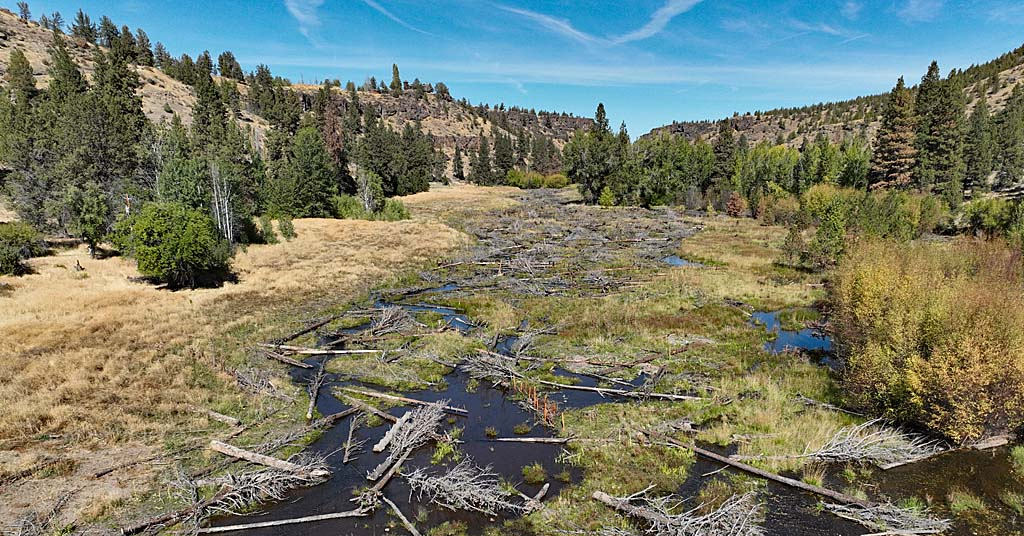
The creek is at the center of a complex ecosystem that people are capable of influencing and altering. However, in an ecosystem, one change can lead to another and lead to unexpected outcomes that are difficult or impossible to plan for. Even the ‘tamed’ creek could behave unpredictably.
Both the settler’s changes and the restoration changed certain aspects of the creek and surrounding area, but total control of an ecosystem is impossible.
The ecosystem displays “emergent” behavior, where the interaction of all components is something that cannot be predicted from how each individual component behaves.
Urban Design
Many people have a view of cities as closer to the computer chip than the creek and its surrounding ecosystem, but in a lot of ways, cities are closer to the ecosystem.
Certainly there are things we can and should shape and plan for in cities, like having a flexible, adaptable street grid, selecting locations for schools, and setting aside land for parks. Those are all things that are more difficult to retrofit if they aren’t done before other things go in. We should also attempt to foster an urban ecosystem that provides for people’s day to day needs close to where they live.
However, cities are impossible to design and plan with chip-like precision. And even where a design might be close to “perfect” for a given point in time, cities change, needs change, the economy changes, and if you are playing catch up via long, drawn out processes to alter some bit of land use code, you are losing out on what that flexibility might have provided.
Say you set out, in 2015 to design a portion of a city for 2020 and mostly get it right. Then the pandemic hits and needs and behaviors change, and the city needs to adapt. A few years later in 2030, things are going to diverge even further from the needs envisioned in 2015. The initial planning process should be a ‘good guess’ that provides a starting point. It’s not a rigid contract for how a neighborhood should look forever and ever.
In contrast with a rigid planning process, Galveston Avenue in Bend is an area of the city built out before zoning and was allowed to continue to change to meet people’s needs over time. Its evolution is clearly visible: many of what are now businesses are converted homes. There is actually still at least one house there for people to live in, so that process isn’t complete. Over time, if left to adapt on its own, some of the small businesses in former homes would be replaced by larger structures with a mix of businesses, offices and some dwellings.
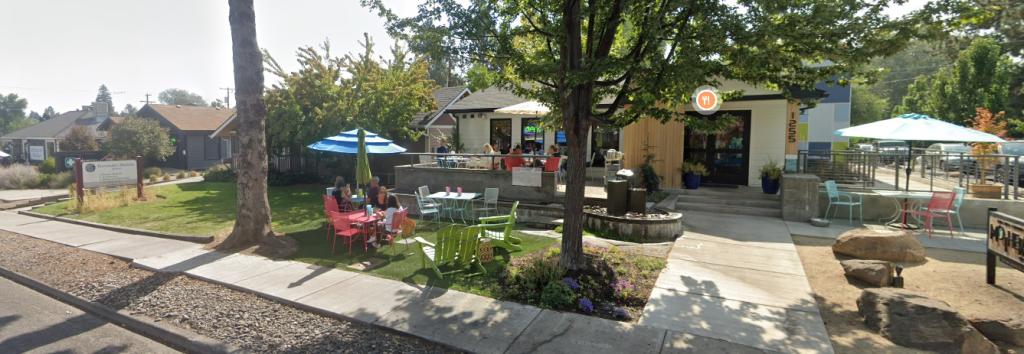
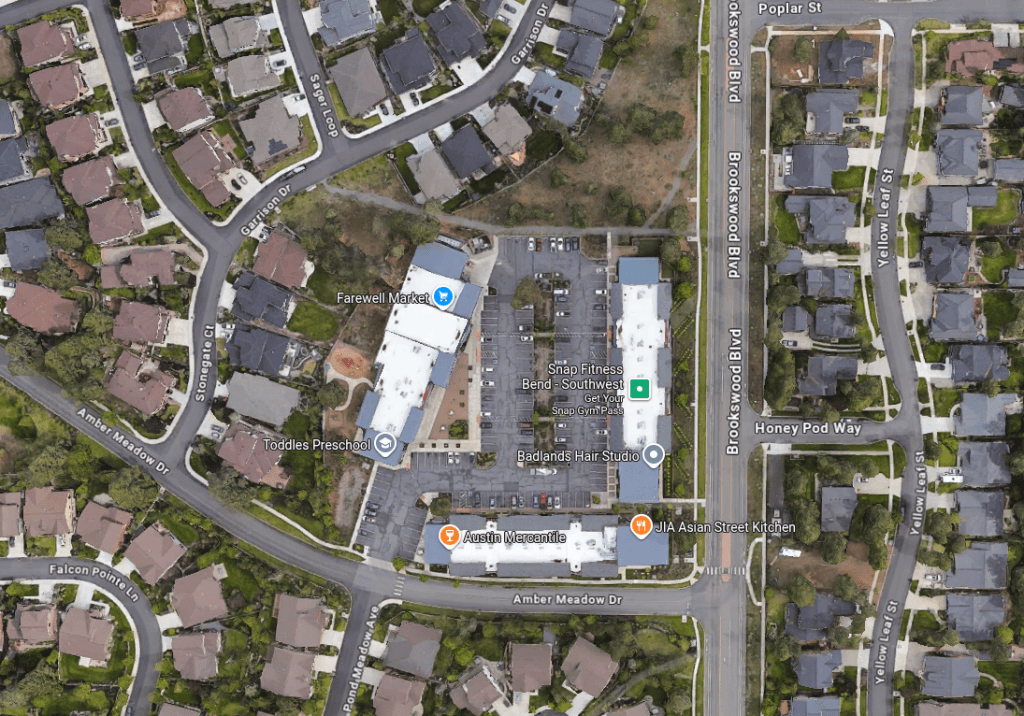
Compare and contrast with Brookswood Plaza, a planned bit of commercial development on the southern edge of Bend. To be clear, the neighborhood is much better off having this than not, but it looks rigid and unlikely to change or grow as the population in the area expands. It is centered on an area for temporary automobile storage, rather than the businesses on Galveston that look inviting for pedestrians walking along the street.
Back to the Future
There are a lot of things about the past that we don’t want to replicate. Ironically, in terms of land use, Bend was built around two big noisy, smelly, dangerous mills, with logs clogging the Deschutes river. That’s not what we want.
What we want is the flexibility in zoning for people to be able to create what’s needed. Some of that is homes for people to live in. Some of it is low-impact, local businesses on land they own, and do so with very low hurdles, like in this joint proposal from Central Oregon Land Watch and Central Oregon YIMBY: https://www.centraloregonlandwatch.org/neighborhood-commercial
 Bend YIMBY